Portfolio
Ionocom has worked on a wide variety of projects ranging from military battery systems to guitar pre-amplifiers. Shown below is a selection of representative projects.
Consumer Electronics
These projects are examples of consumer electronics products such as computer peripherals, audio products, and accessories for iPods and iPhones.
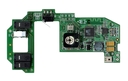 This printed circuit assembly incorporated a laser-based motion sensor
and a 2.4GHz wireless link to form the basis of a laser wireless USB
computer mouse. Ionocom designed the hardware and wrote the firmware.
The design achieved good wireless range with a
low-cost printed circuit antenna, and achieved good battery life
despite the demands of the laser sensor.
This printed circuit assembly incorporated a laser-based motion sensor
and a 2.4GHz wireless link to form the basis of a laser wireless USB
computer mouse. Ionocom designed the hardware and wrote the firmware.
The design achieved good wireless range with a
low-cost printed circuit antenna, and achieved good battery life
despite the demands of the laser sensor.
 This FM transmitter operated in the 88-108MHz broadcast band
and allowed audio from an iPod to be received by a domestic or
car radio.
A novel feature of the design was the use of the display of the iPod
itself to provide the user interface, avoiding the need for a separate LCD.
This feature was the subject of a patent application.
This, and the compact PCB layout, provided the client with the smallest
device on the market, perfectly complementing the iPod nano.
This consumer product was designed for low-cost, high volume offshore
manufacture.
This FM transmitter operated in the 88-108MHz broadcast band
and allowed audio from an iPod to be received by a domestic or
car radio.
A novel feature of the design was the use of the display of the iPod
itself to provide the user interface, avoiding the need for a separate LCD.
This feature was the subject of a patent application.
This, and the compact PCB layout, provided the client with the smallest
device on the market, perfectly complementing the iPod nano.
This consumer product was designed for low-cost, high volume offshore
manufacture.
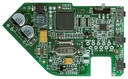 This FM transmitter operated in the 88-108MHz broadcast band
and allowed audio from an iPod to be received by a car radio. It
included a power supply to allow the iPod to be charged from the
vehicle's lighter socket. The design provided the client
with a great-sounding, competitive unit that also included
a first-to-market feature that sends artist and song information
to RDS-equipped radios. The implementation of the RDS feature was
the subject of a patent application.
This FM transmitter operated in the 88-108MHz broadcast band
and allowed audio from an iPod to be received by a car radio. It
included a power supply to allow the iPod to be charged from the
vehicle's lighter socket. The design provided the client
with a great-sounding, competitive unit that also included
a first-to-market feature that sends artist and song information
to RDS-equipped radios. The implementation of the RDS feature was
the subject of a patent application.
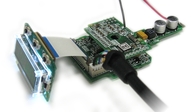 This FM transmitter allowed audio from an iPod to be received
by a car radio, transmitted song information via RDS and provided
for iPod charging. It also included a custom backlit LCD. The design could be
configured in various different ways allowing the client to produce
a family of products with different feature sets.
This FM transmitter allowed audio from an iPod to be received
by a car radio, transmitted song information via RDS and provided
for iPod charging. It also included a custom backlit LCD. The design could be
configured in various different ways allowing the client to produce
a family of products with different feature sets.
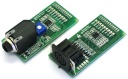 Ionocom has designed various pre-amplifiers for piezo-electric guitar pickups,
including hexaphonic models with individual outputs for each string, as well as
features that blend piezo and magnetic pickups, and provide automatic switching.
Both retail and OEM versions have been designed.
Ionocom has designed various pre-amplifiers for piezo-electric guitar pickups,
including hexaphonic models with individual outputs for each string, as well as
features that blend piezo and magnetic pickups, and provide automatic switching.
Both retail and OEM versions have been designed.
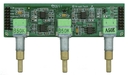 Using custom stacked pots this parametric tone control for
piezo-electric guitar pickups provides bass, treble and
sweepable mid-range controls in addition to volume adjustment
for analog and MIDI signals.
Using custom stacked pots this parametric tone control for
piezo-electric guitar pickups provides bass, treble and
sweepable mid-range controls in addition to volume adjustment
for analog and MIDI signals.
 This keyboard encoder was designed for a miniature keyboard
for use with Palm and PocketPC PDAs, using an IrDA infrared link
between keyboard and PDA.
Important characteristics are small size, very low power consumption
for long term operation from a single AA cell, and low manufacturing cost.
Ionocom designed the electronics.
This consumer product was manufactured offshore in very high volumes.
This keyboard encoder was designed for a miniature keyboard
for use with Palm and PocketPC PDAs, using an IrDA infrared link
between keyboard and PDA.
Important characteristics are small size, very low power consumption
for long term operation from a single AA cell, and low manufacturing cost.
Ionocom designed the electronics.
This consumer product was manufactured offshore in very high volumes.

Professional - Radio Communications
These projects are examples of professional products including some form of wireless communication.
 This miniature transmitter was designed for an asset tracking application.
The unit includes a fully synthesised transmitter and a microcontroller.
Transmitting into a built-in loop antenna the unit operates on two channels
around 433MHz, and was designed to meet both FCC and European regulatory standards.
Important characteristics for the client were long battery life and small size.
This miniature transmitter was designed for an asset tracking application.
The unit includes a fully synthesised transmitter and a microcontroller.
Transmitting into a built-in loop antenna the unit operates on two channels
around 433MHz, and was designed to meet both FCC and European regulatory standards.
Important characteristics for the client were long battery life and small size.
 This ultra-miniature 433MHz receiver was designed to fit inside the battery pack of
a consumer cell-phone, to add proprietary features without enlarging the form-factor.
It measured just 40mm x 50mm and was less than 3mm thick, including the antenna and screening can.
Designed to meet FCC and European standards, the board consumed minimal current
and interfaced with custom software running in the phone.
This ultra-miniature 433MHz receiver was designed to fit inside the battery pack of
a consumer cell-phone, to add proprietary features without enlarging the form-factor.
It measured just 40mm x 50mm and was less than 3mm thick, including the antenna and screening can.
Designed to meet FCC and European standards, the board consumed minimal current
and interfaced with custom software running in the phone.
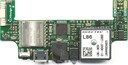 This compact board was designed to be incorporated into a badge worn by workers on mining sites.
It included a GPS receiver to determine location, and a 900MHz LORA transceiver
to communicate with a central base station to keep track of personnel for safety
and security purposes. The design was optimised for low power consumption.
Ionocom designed the hardware.
This compact board was designed to be incorporated into a badge worn by workers on mining sites.
It included a GPS receiver to determine location, and a 900MHz LORA transceiver
to communicate with a central base station to keep track of personnel for safety
and security purposes. The design was optimised for low power consumption.
Ionocom designed the hardware.
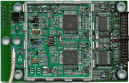 This miniature 433MHz, dual channel receiver was designed to meet both FCC and
European regulatory standards. Using one-third the current and occupying significantly
less volume than a previous single channel product, the dual channel receiver doubled
the probability of receiving a transmission.
This miniature 433MHz, dual channel receiver was designed to meet both FCC and
European regulatory standards. Using one-third the current and occupying significantly
less volume than a previous single channel product, the dual channel receiver doubled
the probability of receiving a transmission.

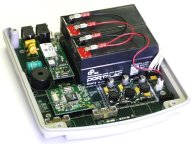 This printed circuit assembly was the heart of a microprocessor-based desktop unit
that included a radio receiver, large amounts of Flash memory for storage of events,
a telephone modem for communication with a central office, provision for connection
of an internal cellular modem, and both mains and battery power supplies.
The design also included a display and keypad board.
The unit achieved a battery run-time more than three times longer than the
client's previous design. The unit was designed to meet
international safety standards.
This printed circuit assembly was the heart of a microprocessor-based desktop unit
that included a radio receiver, large amounts of Flash memory for storage of events,
a telephone modem for communication with a central office, provision for connection
of an internal cellular modem, and both mains and battery power supplies.
The design also included a display and keypad board.
The unit achieved a battery run-time more than three times longer than the
client's previous design. The unit was designed to meet
international safety standards.
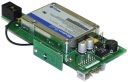 This printed circuit assembly incorporated an off-the-shelf cellular modem
module together with a custom switched-mode power supply and a tri-band
(900MHz, 1800MHz, 1900MHz) antenna. The unit provided communications over
CDMA or GSM cellular networks. Ionocom selected the modem module and antenna,
designed the power supply electronics,
and optimised the antenna matching through careful positioning in the enclosure.
This printed circuit assembly incorporated an off-the-shelf cellular modem
module together with a custom switched-mode power supply and a tri-band
(900MHz, 1800MHz, 1900MHz) antenna. The unit provided communications over
CDMA or GSM cellular networks. Ionocom selected the modem module and antenna,
designed the power supply electronics,
and optimised the antenna matching through careful positioning in the enclosure.
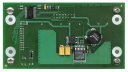 This interface board allowed an Iridium satellite communications module to be
added to a desktop communications unit that had previously only supported
PSTN and cellular phone communications. To meet the client's tight deadline
Ionocom took this product from requirement to working prototype in just two weeks.
This interface board allowed an Iridium satellite communications module to be
added to a desktop communications unit that had previously only supported
PSTN and cellular phone communications. To meet the client's tight deadline
Ionocom took this product from requirement to working prototype in just two weeks.
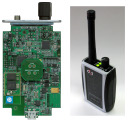 This handheld device included a 433MHz transceiver for communicating with asset tags,
a 2.4GHz Bluetooth transceiver for communicating with a Windows Mobile handheld,
and a 13.56MHz near-field inductive link. Ionocom designed the electronics and the
mechanics, including tuning of the antennas in the enclosure. Designed to meet FCC and
European standards (not easy with three co-sited radios), the device was significantly
more robust than the client's previous design.
This handheld device included a 433MHz transceiver for communicating with asset tags,
a 2.4GHz Bluetooth transceiver for communicating with a Windows Mobile handheld,
and a 13.56MHz near-field inductive link. Ionocom designed the electronics and the
mechanics, including tuning of the antennas in the enclosure. Designed to meet FCC and
European standards (not easy with three co-sited radios), the device was significantly
more robust than the client's previous design.
 This miniature 433MHz transceiver was designed for an asset tracking system.
It included a bi-directional radio link for robust communications and was
designed to meet FCC and European regulatory standards. The device was designed to
be significantly smaller and easier to manufacture than the client's previous product.
This miniature 433MHz transceiver was designed for an asset tracking system.
It included a bi-directional radio link for robust communications and was
designed to meet FCC and European regulatory standards. The device was designed to
be significantly smaller and easier to manufacture than the client's previous product.
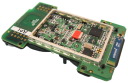 Also designed for an asset tracking system, this device incorporated a 2.4GHz ZigBee
transceiver. Ionocom designed the electronics and worked closely with the mechanical
designers on the design of the custom plastic enclosure.
Also designed for an asset tracking system, this device incorporated a 2.4GHz ZigBee
transceiver. Ionocom designed the electronics and worked closely with the mechanical
designers on the design of the custom plastic enclosure.
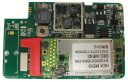 This portable device received transmissions from asset tags via a ZigBee transceiver,
tracked location with a GPS receiver and communicated to a central office via a
dual-band CDMA cellular modem. The device included three separate antennas in a
small custom plastic enclosure together with a lithium ion battery.
This portable device received transmissions from asset tags via a ZigBee transceiver,
tracked location with a GPS receiver and communicated to a central office via a
dual-band CDMA cellular modem. The device included three separate antennas in a
small custom plastic enclosure together with a lithium ion battery.
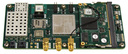 This datalogger designed for a marine environment included GPS, Bluetooth, LTE cellular
and Wi-Fi, along with an iMX6-based processor card. Ionocom worked with the
client to determine the requirements and then designed the hardware in just eight weeks.
This datalogger designed for a marine environment included GPS, Bluetooth, LTE cellular
and Wi-Fi, along with an iMX6-based processor card. Ionocom worked with the
client to determine the requirements and then designed the hardware in just eight weeks.
Industrial
These projects are examples of industrial measurement, control and data logging products.
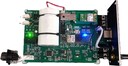 This interface unit provided for downloading data from a datalogging device via CAN bus
or power-line carrier, and uploading the data to a PC or to the cloud via Wi-Fi.
Ionocom designed the hardware, wrote the firmware for the communications MCU, and
worked with a software developer responsible for the embedded Linux application.
This interface unit provided for downloading data from a datalogging device via CAN bus
or power-line carrier, and uploading the data to a PC or to the cloud via Wi-Fi.
Ionocom designed the hardware, wrote the firmware for the communications MCU, and
worked with a software developer responsible for the embedded Linux application.
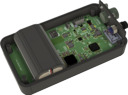 This handheld device with a built-in colour touchscreen was designed for reading
configuration and real-time data from smart battery packs. It features CAN bus and
power line carrier communications, a built-in rechargeable battery, and a USB interface.
Ionocom designed the hardware and wrote the firmware for the embedded ARM Cortex microcontroller.
This handheld device with a built-in colour touchscreen was designed for reading
configuration and real-time data from smart battery packs. It features CAN bus and
power line carrier communications, a built-in rechargeable battery, and a USB interface.
Ionocom designed the hardware and wrote the firmware for the embedded ARM Cortex microcontroller.
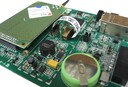 This assisted GPS system was designed to provide accurate location information
for busses in an urban environment. The system combines GPS data
with information from accelerometers and the vehicle's odometer, and knowledge of the bus route,
to provide accurate location estimates even when GPS signals are blocked by buildings.
Ionocom designed the hardware and wrote the firmware.
This assisted GPS system was designed to provide accurate location information
for busses in an urban environment. The system combines GPS data
with information from accelerometers and the vehicle's odometer, and knowledge of the bus route,
to provide accurate location estimates even when GPS signals are blocked by buildings.
Ionocom designed the hardware and wrote the firmware.
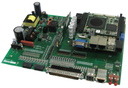 This communications interface unit was designed for use in roadside traffic control
systems. It provided monitoring of traffic and pedestrian signal status, and
communication with a central traffic management system. The software functions
were provided by a PC/104 compatible compute module. Ionocom designed the hardware.
This communications interface unit was designed for use in roadside traffic control
systems. It provided monitoring of traffic and pedestrian signal status, and
communication with a central traffic management system. The software functions
were provided by a PC/104 compatible compute module. Ionocom designed the hardware.
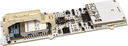 This smart lighting controller was designed to be integrated into commercial LED lighting
fixtures. The unit controlled the LED driver and provided a radar-based presence detection
sensor and a Bluetooth Mesh radio interface for connection to the building's lighting control system.
Ionocom designed the hardware, including the custom low-profile 2.4GHz Bluetooth antenna.
This smart lighting controller was designed to be integrated into commercial LED lighting
fixtures. The unit controlled the LED driver and provided a radar-based presence detection
sensor and a Bluetooth Mesh radio interface for connection to the building's lighting control system.
Ionocom designed the hardware, including the custom low-profile 2.4GHz Bluetooth antenna.
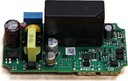 This lighting controller was designed to be retrofitted to existing commercial lighting fixtures.
The unit provides a relay-switched mains output, a 0-10V dimming output, and
both Bluetooth Mesh radio and wired power line carrier communications to
the building's lighting control system. Ionocom designed the hardware.
This lighting controller was designed to be retrofitted to existing commercial lighting fixtures.
The unit provides a relay-switched mains output, a 0-10V dimming output, and
both Bluetooth Mesh radio and wired power line carrier communications to
the building's lighting control system. Ionocom designed the hardware.
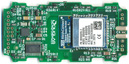 This battery-power wall switch was designed for commercial building lighting control.
It communicates with the building's lighting control system via a Bluetooth Mesh radio,
and is powered by AA batteries allowing installation without the need for mains wiring.
Ionocom designed the hardware and assisted the client with power-optimisation of the firmware.
This battery-power wall switch was designed for commercial building lighting control.
It communicates with the building's lighting control system via a Bluetooth Mesh radio,
and is powered by AA batteries allowing installation without the need for mains wiring.
Ionocom designed the hardware and assisted the client with power-optimisation of the firmware.
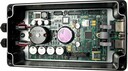 This rugged field data logger was designed to monitor hydrological sensors at depths
of a kilometer or more below ground. Ionocom modernised a previous product by
completely redesigning the hardware to eliminate obsolete components and adding a
modern OLED display, rewriting the firmware using modern practices and a real-time operating system,
and overhauling the signal processing circuitry and algorithms to achieve significantly more reliable
down-hole communications.
This rugged field data logger was designed to monitor hydrological sensors at depths
of a kilometer or more below ground. Ionocom modernised a previous product by
completely redesigning the hardware to eliminate obsolete components and adding a
modern OLED display, rewriting the firmware using modern practices and a real-time operating system,
and overhauling the signal processing circuitry and algorithms to achieve significantly more reliable
down-hole communications.
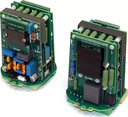 This complex and compact stack of four circuit boards forms a high-voltage, high-energy
igniter for industrial oil-fired boilers. Designed to operate from AC or DC supplies and to
meet stringent safety standards, the unit incorporates a microcontroller to manage
the charge and discharge of a capacitor bank. Ionocom designed the hardware,
wrote the firmware, and designed the injection-molded plastic enclosure and accessories.
This complex and compact stack of four circuit boards forms a high-voltage, high-energy
igniter for industrial oil-fired boilers. Designed to operate from AC or DC supplies and to
meet stringent safety standards, the unit incorporates a microcontroller to manage
the charge and discharge of a capacitor bank. Ionocom designed the hardware,
wrote the firmware, and designed the injection-molded plastic enclosure and accessories.
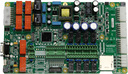 This transfer switch controller was designed for use in commercial building emergency power systems.
It monitors the status of the mains and generator power sources, and controls
the switching between them to ensure a seamless power supply during outages.
Ionocom designed the hardware and firmware.
This transfer switch controller was designed for use in commercial building emergency power systems.
It monitors the status of the mains and generator power sources, and controls
the switching between them to ensure a seamless power supply during outages.
Ionocom designed the hardware and firmware.
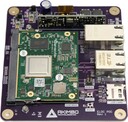 This networked communications board based on a single-board computer module
provided two GbE interfaces and POE. The board required impedance-controlled, length-matched
differential pair routing for the Ethernet interfaces, and careful attention to power distribution.
Ionocom designed the hardware and assisted in the bring-up of the embedded Linux system.
This networked communications board based on a single-board computer module
provided two GbE interfaces and POE. The board required impedance-controlled, length-matched
differential pair routing for the Ethernet interfaces, and careful attention to power distribution.
Ionocom designed the hardware and assisted in the bring-up of the embedded Linux system.
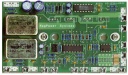 This voltage regulator was designed to provide power conditioning,
protection, state-of-charge monitoring, and a user interface for a
consumer magnesium-air fuel cell product. Ionocom worked closely with
the client on all aspects of the product's electrical design, and also
worked with the mechanical and industrial designers on integration.
This voltage regulator was designed to provide power conditioning,
protection, state-of-charge monitoring, and a user interface for a
consumer magnesium-air fuel cell product. Ionocom worked closely with
the client on all aspects of the product's electrical design, and also
worked with the mechanical and industrial designers on integration.
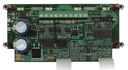 This board monitored pressure sensors in an industrial HVAC setting,
providing a user display and outputs (voltage and 4-20mA) for
remote monitoring. The design was more configurable and provided
improved accuracy and robustness compared with the client's previous product.
This board monitored pressure sensors in an industrial HVAC setting,
providing a user display and outputs (voltage and 4-20mA) for
remote monitoring. The design was more configurable and provided
improved accuracy and robustness compared with the client's previous product.

 This microprocessor controlled data storage module was
developed in just six weeks. The project included
high-speed digital PCB layout; assembly of prototypes using Ionocom's
surface mount assembly and microscopic inspection facilities;
and temperature testing in Ionocom's environmental chamber.
Ionocom also wrote engineering test firmware and designed
an engineering test jig.
This microprocessor controlled data storage module was
developed in just six weeks. The project included
high-speed digital PCB layout; assembly of prototypes using Ionocom's
surface mount assembly and microscopic inspection facilities;
and temperature testing in Ionocom's environmental chamber.
Ionocom also wrote engineering test firmware and designed
an engineering test jig.
Industrial and Military - Batteries
The Vancouver area has a strong local battery and alternative energy sector. These projects are examples of battery monitoring and control products.
 This board was designed to fit inside a battery pack used down-hole in the oil industry.
It provides data logging of battery pack parameters, along with MWD (Measurement While Drilling)
functions. The board includes a microcontroller, Flash memory, a real-time clock, accelerometers,
magnetometers and other sensors, and operates up to 165°C in a 100g shock and vibration environment.
Sophisticated on-board signal processing determines parameters such as rate of rotation and inclination
from the raw sensor data. Data can be communicated live via a CAN bus, or logged and downloaded later.
The design was optimised for low power consumption to maximise battery storage life.
This board was designed to fit inside a battery pack used down-hole in the oil industry.
It provides data logging of battery pack parameters, along with MWD (Measurement While Drilling)
functions. The board includes a microcontroller, Flash memory, a real-time clock, accelerometers,
magnetometers and other sensors, and operates up to 165°C in a 100g shock and vibration environment.
Sophisticated on-board signal processing determines parameters such as rate of rotation and inclination
from the raw sensor data. Data can be communicated live via a CAN bus, or logged and downloaded later.
The design was optimised for low power consumption to maximise battery storage life.
 Several printed circuit assemblies have been developed to reduce
production costs for high-volume military batteries.
Ionocom's changes to the protection circuitry produced
considerable simplification of the assembly process.
Ionocom worked closely with the client to design a switch mechanism
that is reliable and simple to manufacture.
Several printed circuit assemblies have been developed to reduce
production costs for high-volume military batteries.
Ionocom's changes to the protection circuitry produced
considerable simplification of the assembly process.
Ionocom worked closely with the client to design a switch mechanism
that is reliable and simple to manufacture.
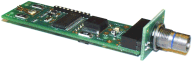 This sophisticated printed circuit assembly was designed to be
incorporated in the latest generation of military batteries.
The microcontroller-based unit not only provided protection and
control functions, it also implemented a State Of Charge Indicator
that provided an LCD readout and an SMBus Smart Battery interface.
Ionocom designed the hardware and wrote the firmware.
Ionocom also provided a PC-based system for factory programming of
the configurable parameters.
This sophisticated printed circuit assembly was designed to be
incorporated in the latest generation of military batteries.
The microcontroller-based unit not only provided protection and
control functions, it also implemented a State Of Charge Indicator
that provided an LCD readout and an SMBus Smart Battery interface.
Ionocom designed the hardware and wrote the firmware.
Ionocom also provided a PC-based system for factory programming of
the configurable parameters.
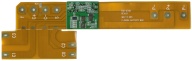 This board was designed to fit inside a lithium-ion battery pack. It provided a
standard protection circuit, plus a sophisticated charge control circuit that
allowed the pack to be charged from the end-user's existing Ni-Cd chargers.
The product allowed Ionocom's client to sell lithium-ion packs into a new market,
and provided end-users with improved run-time without having to replace fielded
chargers. The design incorporated a flexible circuit that folds up inside the
pack, making the connections to the batteries and external terminals, resulting
in savings in size and assembly costs.
This board was designed to fit inside a lithium-ion battery pack. It provided a
standard protection circuit, plus a sophisticated charge control circuit that
allowed the pack to be charged from the end-user's existing Ni-Cd chargers.
The product allowed Ionocom's client to sell lithium-ion packs into a new market,
and provided end-users with improved run-time without having to replace fielded
chargers. The design incorporated a flexible circuit that folds up inside the
pack, making the connections to the batteries and external terminals, resulting
in savings in size and assembly costs.
 This board was designed to fit inside a high-current lithium-ion battery pack
intended for an industrial application. The board provideed a standard protection
circuit that handled the high currents required.
This board was designed to fit inside a high-current lithium-ion battery pack
intended for an industrial application. The board provideed a standard protection
circuit that handled the high currents required.
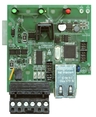 This board controled a battery backup power supply for telecom applications.
The board included the battery charger, and microprocessor to control the
charge and discharge of the Ni-MH battery pack and provide a user interface
and alarm outputs. The board also provided an Ethernet interface that supported
TCP/IP, DHCP, Telnet, HTTP and SNMP which allowed status to be monitored on a
web page or via SNMP. Ionocom designed the hardware and wrote the firmware.
This board controled a battery backup power supply for telecom applications.
The board included the battery charger, and microprocessor to control the
charge and discharge of the Ni-MH battery pack and provide a user interface
and alarm outputs. The board also provided an Ethernet interface that supported
TCP/IP, DHCP, Telnet, HTTP and SNMP which allowed status to be monitored on a
web page or via SNMP. Ionocom designed the hardware and wrote the firmware.